
Sagarmatha Environmental Expedition
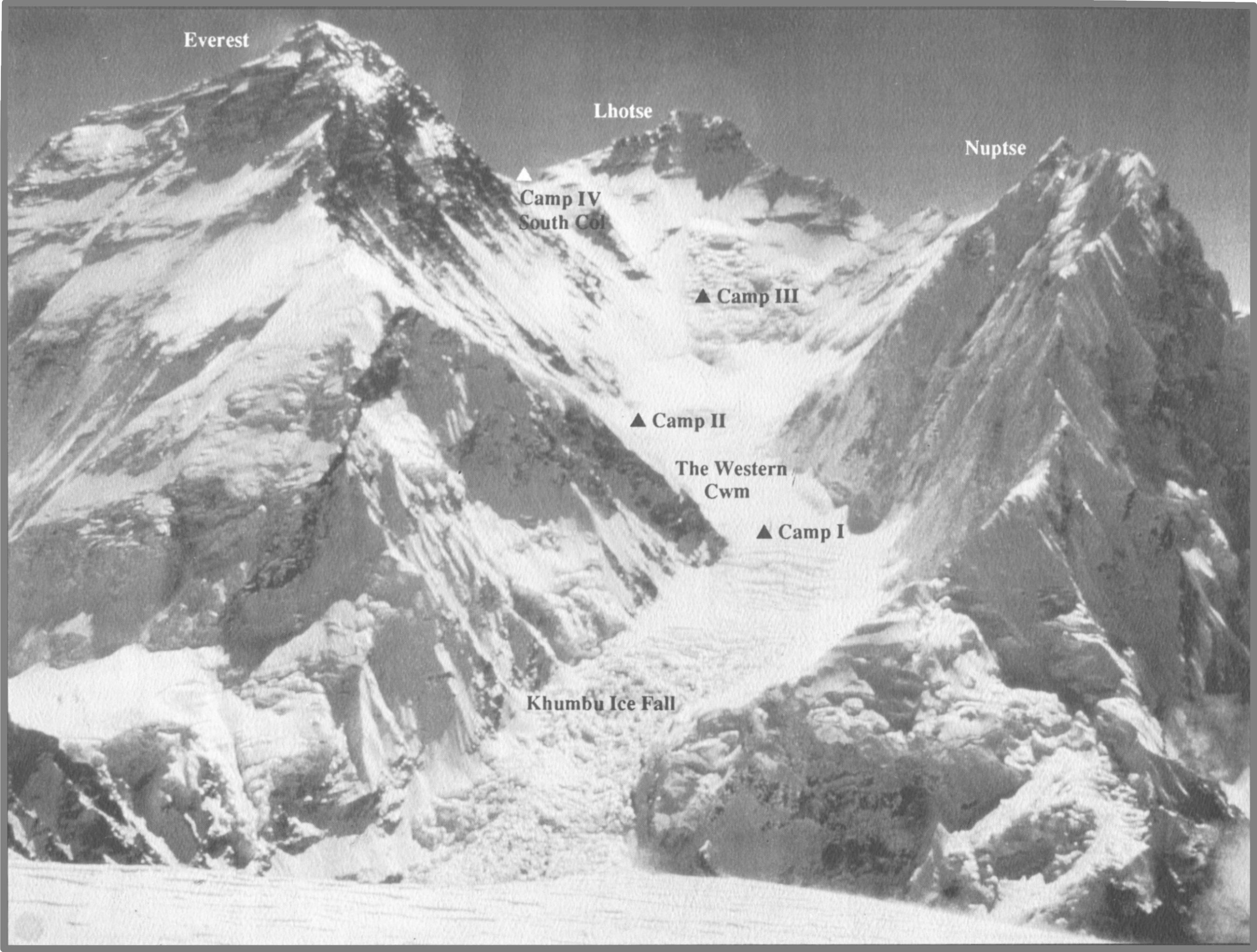
The world’s highest mountain was originally named after Sir George Everest who never saw the mountain. George Everest in fact did not want the peak named after him, believing it important to use local names, but Tibet and Nepal were closed to foreigners, and the local names were, claimed by his employee, to be unknown or unconfirmed at the time (1856). Most people recognize the Nepali name as Sagarmatha, and the Tibetan name of Qomolangma which means “Goddess Mother of the World”. Since the mountain is located on the border between Tibet and Nepal, there are two national parks, one in each country. Sagarmatha National Park (Nepal) and Qomolangma National Park (Tibet).
Scott Fischer and Steve Goryl heard of the idea of an Environmental Everest Climb.They were inspired by Liz Nichol and Bob McConnell's efforts on the Chinese side of the world's highest mountain. Liz and Bob were the first recipients of the David Brower Award for Conservation. Together, Scott and Steve formed a team that was intent on exploring every avenue of conservation on this majestic peak. After several member changes, and a loss of permit funding, a strong team of five climbers was forged, with the goal of climbing Everest and to “Leave No Trace”.
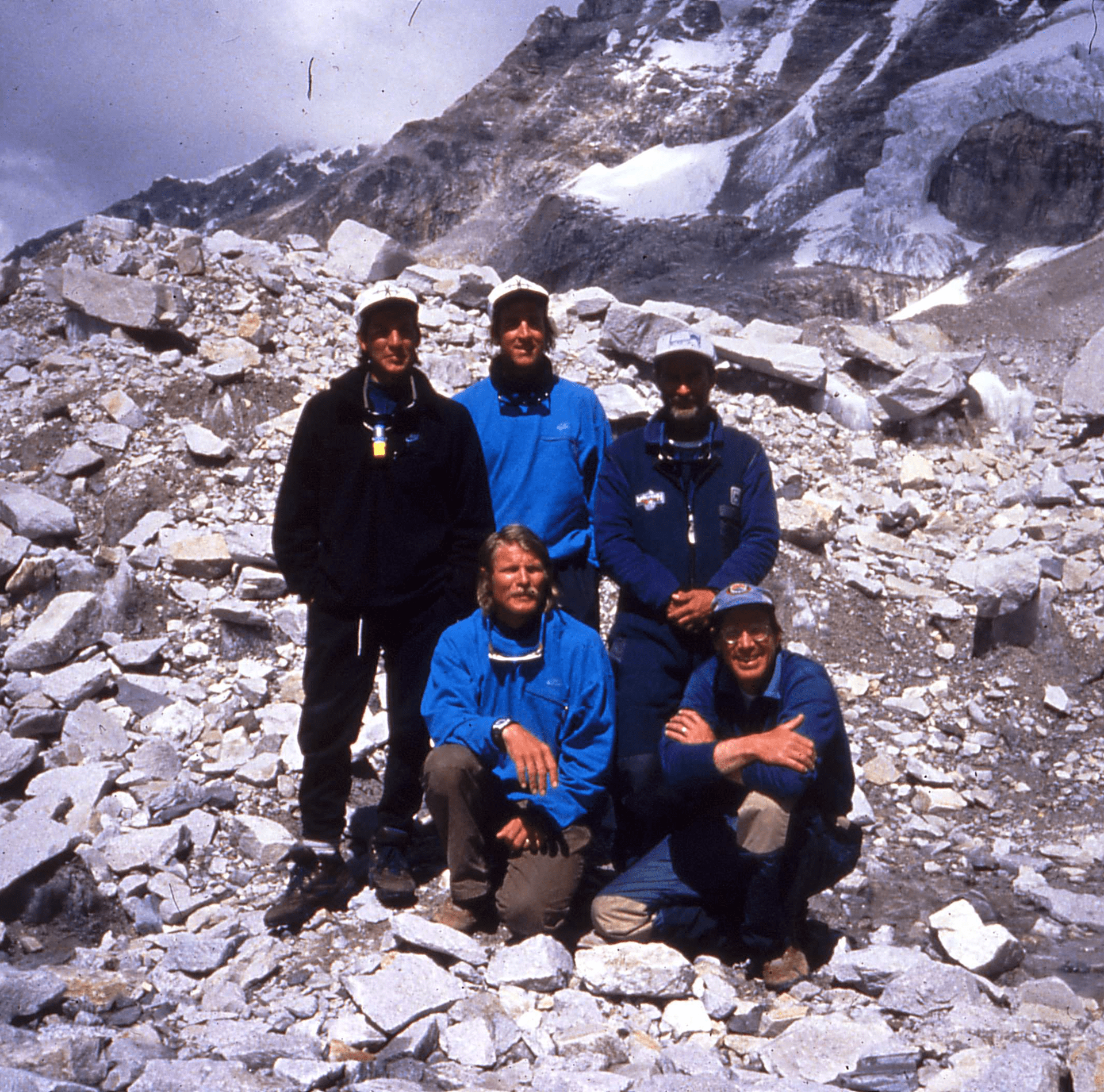
Back row: Brent Bishop, Rob Hess, Steve Goryl
Front row: Scott Fischer, Dr. Steve Gipe
The climbing team was made up of four N.O.L.S. instructors who were experienced high altitude mountaineers, and mountain guide Brent Bishop, the son of Barry Bishop who made the summit in 1963.
- Steve Goryl (Expedition Leader). Steve had climbed to the summit of Aconcagua (22,834 ft), 5 times with students in 1988, 1989 and 1990. As a N.O.L.S. instructor, he also climbed Denali with students and the Chairman of the N.O.L.S. board Wilford Welch. Steve ended up climbing to the summit of Everest alone, after waiting at 26,000 ft (Camp IV) for four days in high winds.
- Scott Fischer (Climb Leader). Scott was one of the founding members of "Mountain Madness" and a former N.O.L.S. instructor. Scott had attempted Everest twice previously without success. On this climb, he became the 4th American to attain the summit of Everest without using supplementary oxygen. Tragically, Scott lost his life two years later, as portrayed in the books “The Climb” and “Into Thin Air” chronicling the devastating events of 1996 during which eight climbers lost their lives.
- Rob Hess (Equipment Leader). Rob had climbed close to the summit of K2, and is also a former N.O.L.S. instructor. He was one of 15 Americans to hold the prestigious UIAGM/IFMGA/AMGA certification. Rob became the 3rd American to summit without using supplementary oxygen.
- Brent Bishop (Finance Leader). Brent is the son of Barry Bishop, who attained the summit in 1963, as a member of the first American team to successfully climb Mount Everest. Brent followed in his father's footsteps, and became the 1st American father and son, to summit Mount Everest.
- Steve Gipe (Medical Leader). Steve was an "early years" N.O.L.S. instructor and was an Emergency Room physician from Bozeman, Montana. Steve elected not to summit on this climb, and reached 25,000 ft before descending. He returned to Everest a second time, as the physician for Erik Weihenmayer, who was the first blind man to summit Everest.
Back row: Brent Bishop, Rob Hess, Steve Goryl
Front row: Scott Fischer, Dr. Steve Gipe
The climbing team was made up of four N.O.L.S. instructors who were experienced high altitude mountaineers, and mountain guide Brent Bishop, the son of Barry Bishop who made the summit in 1963.
- Steve Goryl (Expedition Leader). Steve had climbed to the summit of Aconcagua (22,834 ft), 5 times with students in 1988, 1989 and 1990. As a N.O.L.S. instructor, he also climbed Denali with students and the Chairman of the N.O.L.S. board Wilford Welch. Steve ended up climbing to the summit of Everest alone, after waiting at 26,000 ft (Camp IV) for four days in high winds.
- Scott Fischer (Climb Leader). Scott was one of the founding members of "Mountain Madness" and a former N.O.L.S. instructor. Scott had attempted Everest twice previously without success. On this climb, he became the 4th American to attain the summit of Everest without using supplementary oxygen. Sadly, Scott lost his life two years later, as portrayed in the books “The Climb” and “Into Thin Air” chronicling the tragic events of 1996 during which eight climbers lost their lives.
- Rob Hess (Equipment Leader). Rob had climbed close to the summit of K2, and is also a former N.O.L.S. instructor. He was one of 15 Americans to hold the prestigious UIAGM/IFMGA/AMGA certification. Rob became the 3rd American to summit without using supplementary oxygen.
- Brent Bishop (Finance Leader). Brent is the son of Barry Bishop, who attained the summit in 1963, as a member of the first American team to successfully climb Mount Everest. Brent followed in his father's footsteps, and became the 1st American father and son, to summit Mount Everest.
- Steve Gipe (Medical Leader). Steve was an "early years" N.O.L.S. instructor and was an Emergency Room physician from Bozeman Montana. Steve elected not to summit on this climb, and reached 25,000 ft before descending. He returned to Everest a second time, as the physician for Erik Weihenmayer, who was the first blind man to summit Everest.
Steve and Scott formed a team that was intent on an environmental climb up the South Col route. Over three and a half years they put all the pieces in place. They then agreed on the roles each would have a primary responsibility for, and then got to work. They raised the funds needed to pay the Nepalese government the $50,000 for a climbing permit. They raised the funds that they needed to pay for their airfares and all the provisions they would need during the three months they estimated they would be on the mountain. One method of fund raising was to have “support” treks that would all end up at Everest Base camp which is at 18,000 ft.
Since the climb was a 501c3 expedition, each trekker would be required to pay $1,000 to support the climb. These support trekkers provided excellent support as they arrived at base camp. The team’s goals were clear: To safely and successfully summit the world’s highest mountain and introduce the “Leave No Trace” principles and practices to Everest mountaineering, as well as have two team members attain the summit without supplemental O2.
With equipment support from the Trimble Inc. corporation, the expedition attempted the first GPS measurement of the summit. GPS technology was also used to do an environmental impact assessment of the mountain. They undertook water quality tests at three different camps and, of utmost significance, they removed 5,000 of trash off the high camps. The expedition was the first to pay the Sherpas to remove discarded oxygen bottles. Every team Sherpa was paid $12 per bottle, for every bottle they brought down from Camp IV to Everest base camp.
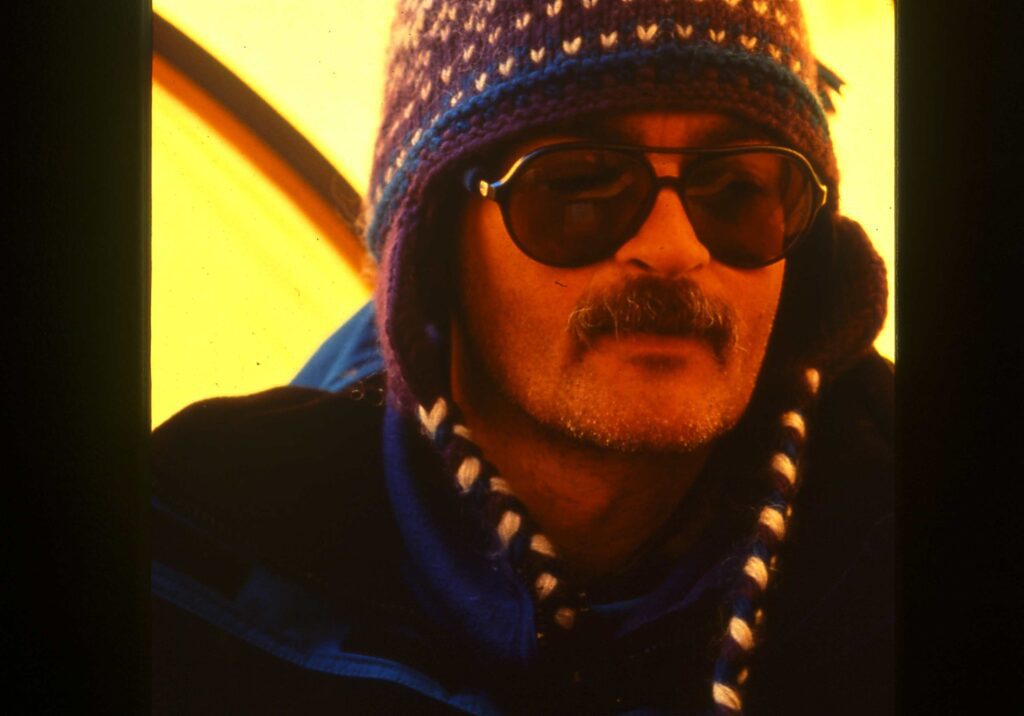
Steve Goryl
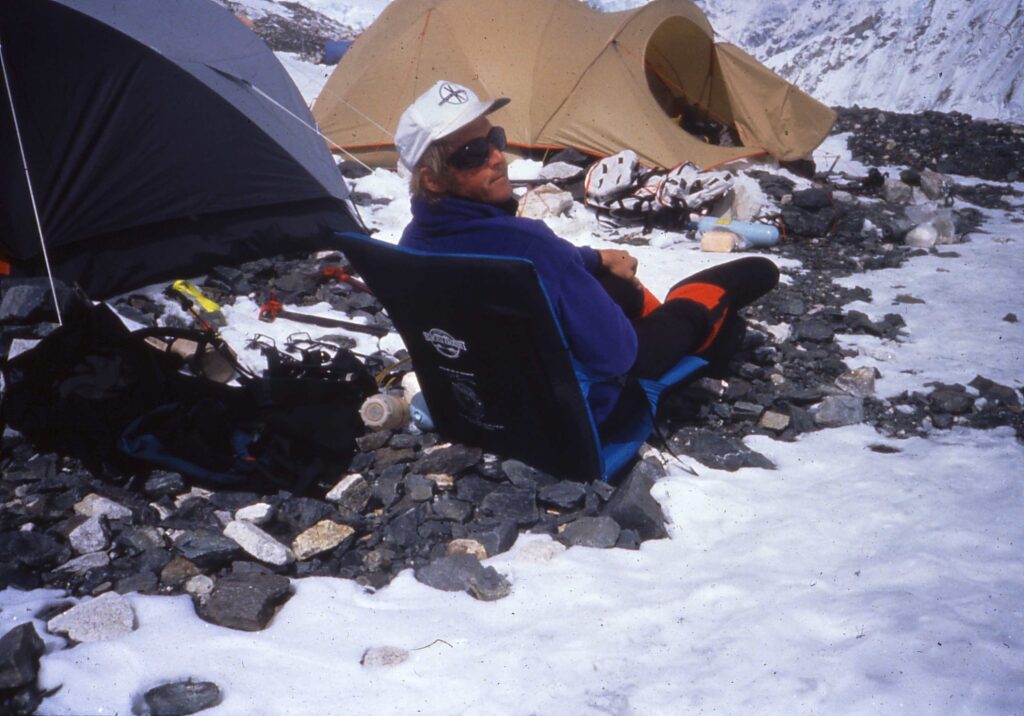
Rob Hess
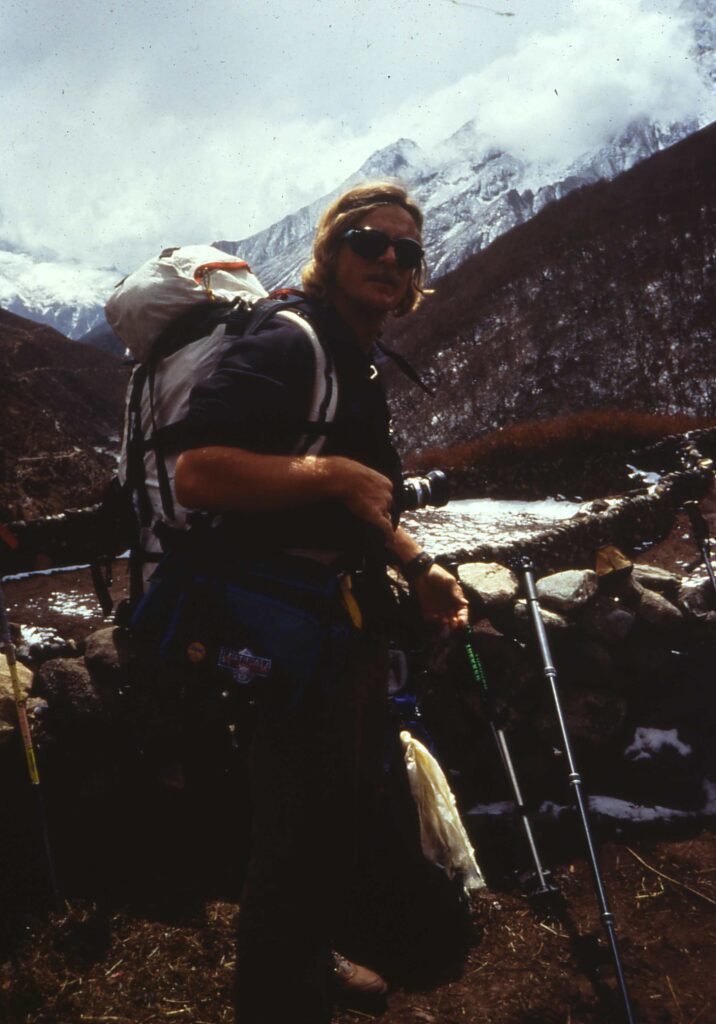
Scott Fischer
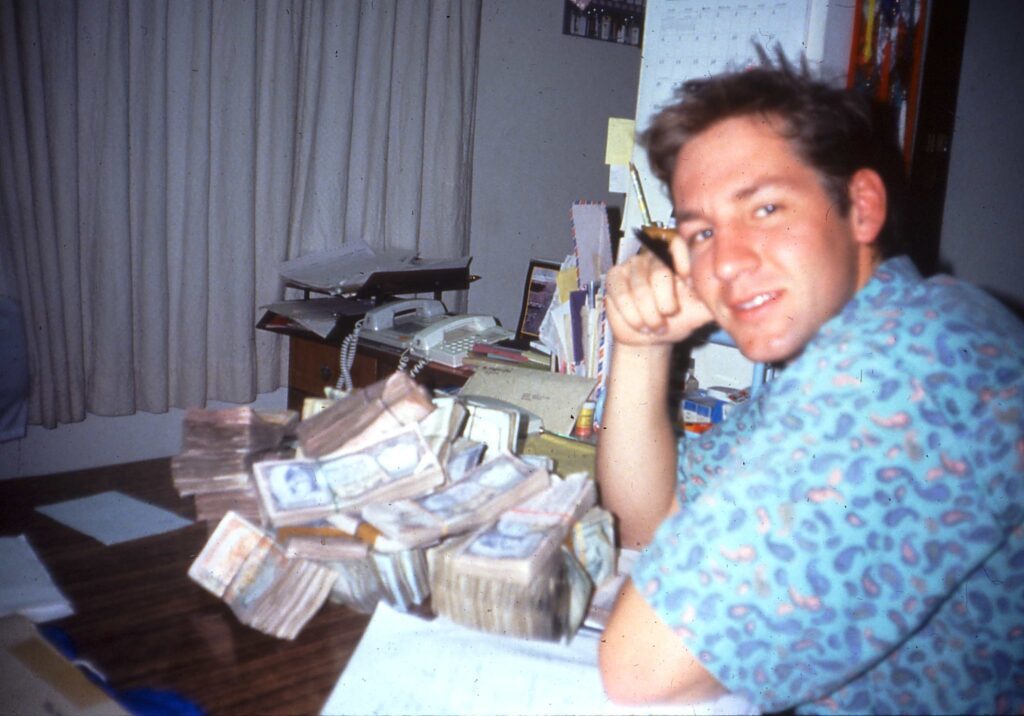
Brent Bishop
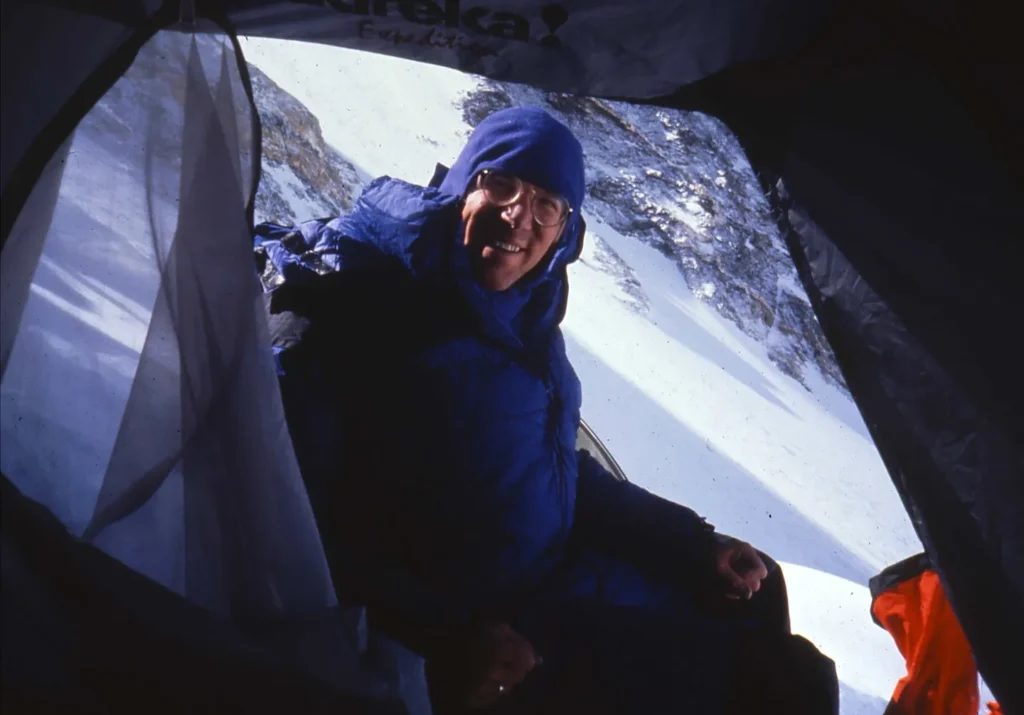
Dr. Steve Gipe
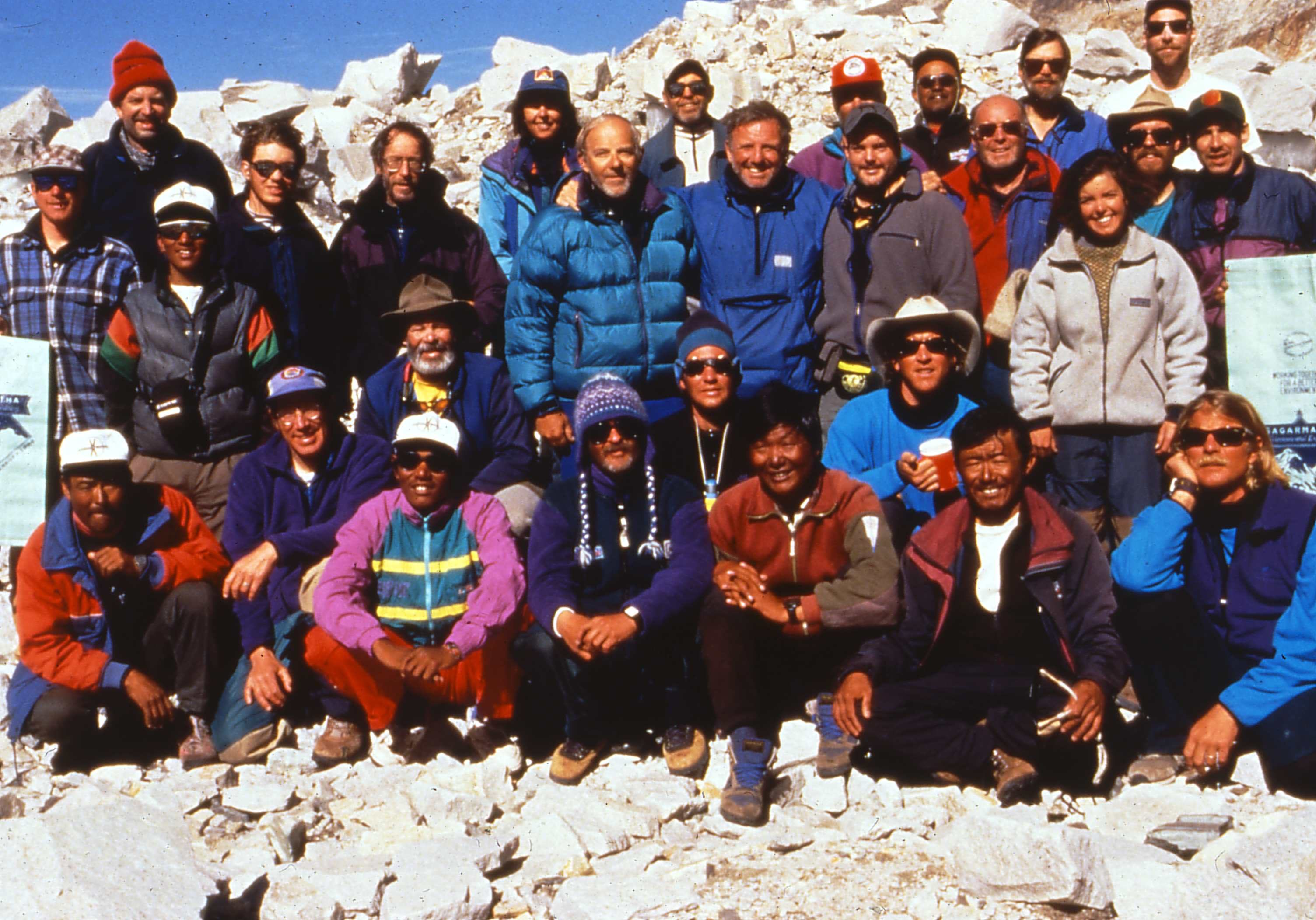
Sagarmatha Environmental Expedition, made up of five climbers, five Sherpas, and five N.O.L.S. trustees. The support team was lead by Wilford Welch a former N.O.L.S. board chair.
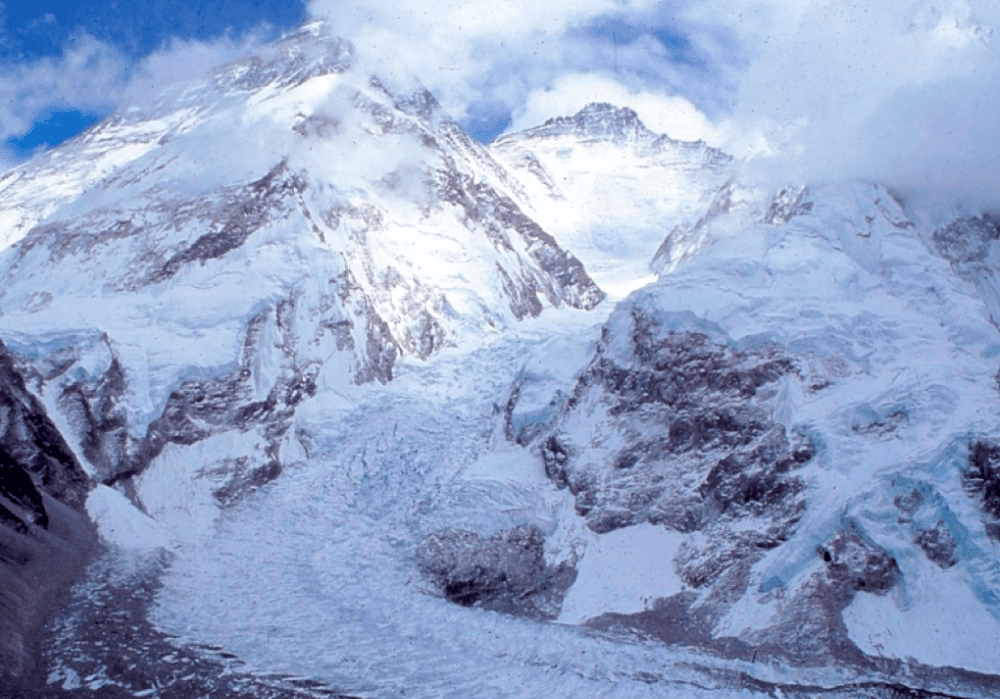
The climbing team first had to climb through the very dangerous two-mile “Khumbu Icefall”, made up of huge blocks of ice and snow that moves down the mountain at a rate of 1 meter a day. This information was gained by an ice survey that was done by graduate students of Dr. Bradford Washburn.
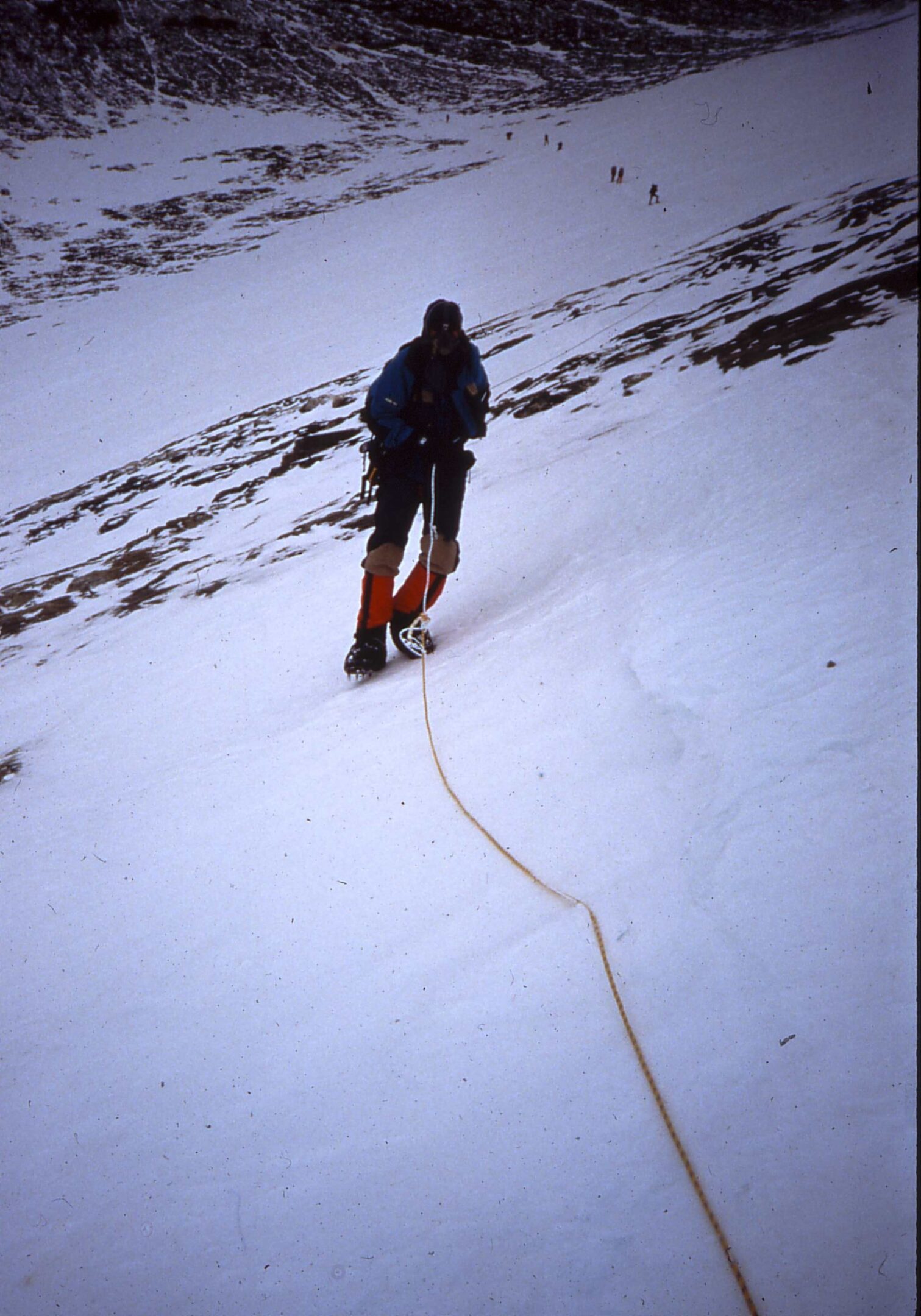
Dr. Steve Gipe Descends to Camp 3
As each camp on the mountain was established, trash was removed and acclimatization occurred. When Dr. Gipe decided to descend, he climbed down to Camp 3 at 23,500 ft. Steve went down to Camp 3 with him. Meanwhile the other three team mates and Sherpas prepared for the summit from Camp 4. Scott, who had tried to summit Everest two times before without success continued on to the summit with Rob Hess. Rob became the third American climber to summit Everest without oxygen, and Scott the forth to achieve that extraordinary feat. This was a significant mountaineering achievement on Mount Everest!
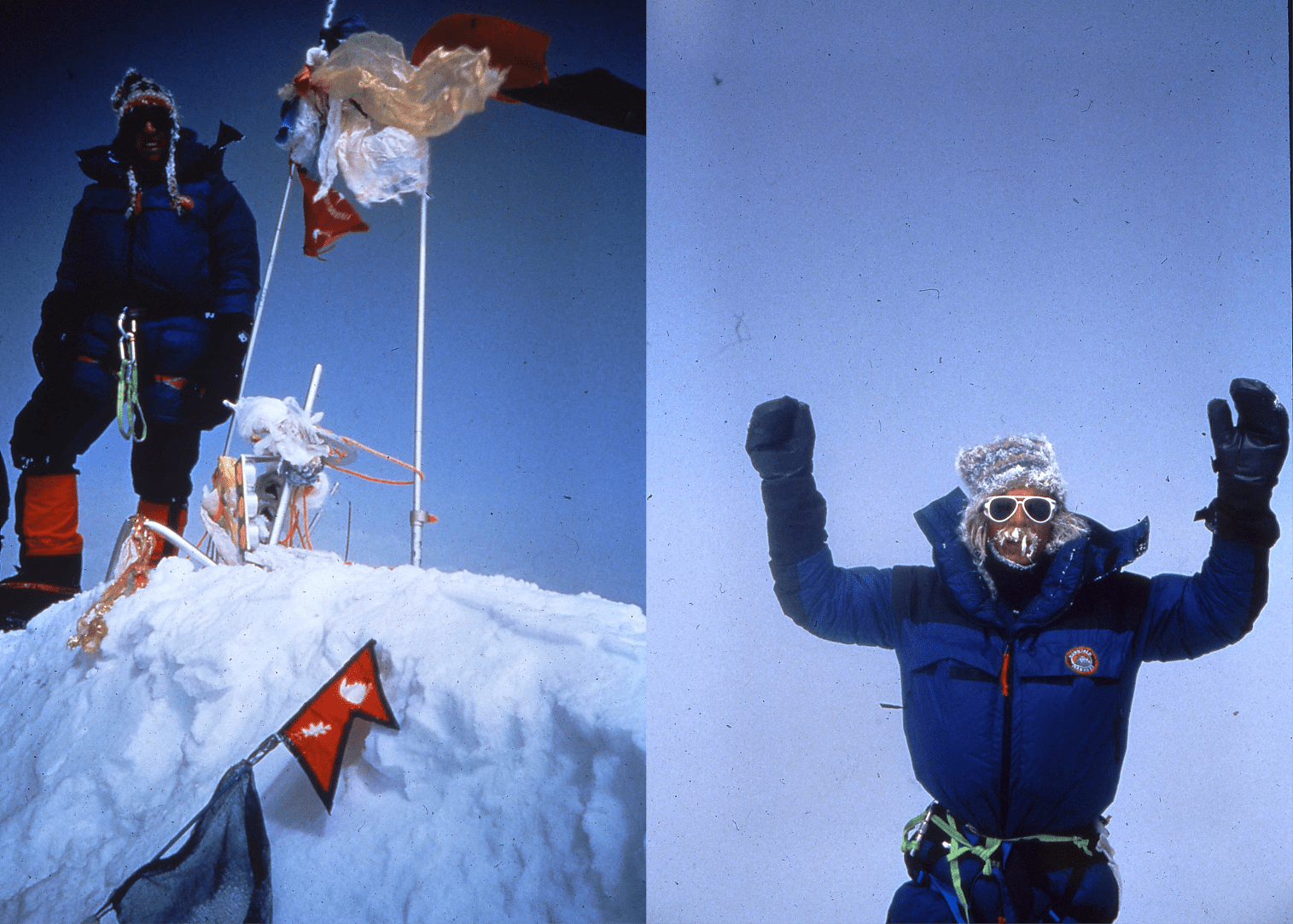
Rob Hess and Scott Fischer on the summit
Brent Bishop summited with oxygen with the team. His father, Barry Bishop, had summited Everest in 1963 on the first American team to climb to the summit. Brent and his father became the first American father and son to climb Mount Everest.
Scott and Rob arrived back down to Camp 4 from the summit, Steve then arrived all alone. He congratulated Scott, Rob and Brent on their summit success! The next morning, before departing, Scott advised Steve to not attempt the summit alone, saying: “If you attempt to summit alone you will die”. This situation resulted in Steve being stuck for four days and nights at Camp 4 at 26,000 ft, much of the time exposed to winds in excess of 100 mph.
Not having enough food or oxygen to survive during those four days and nights, Steve sucked oxygen from the many old bottles lying among the rocks, and ate what he could scavenge from abandoned camps, to keep himself nourished. Four days later the winds were no longer raging, Steve continued up the mountain and made the summit all alone.
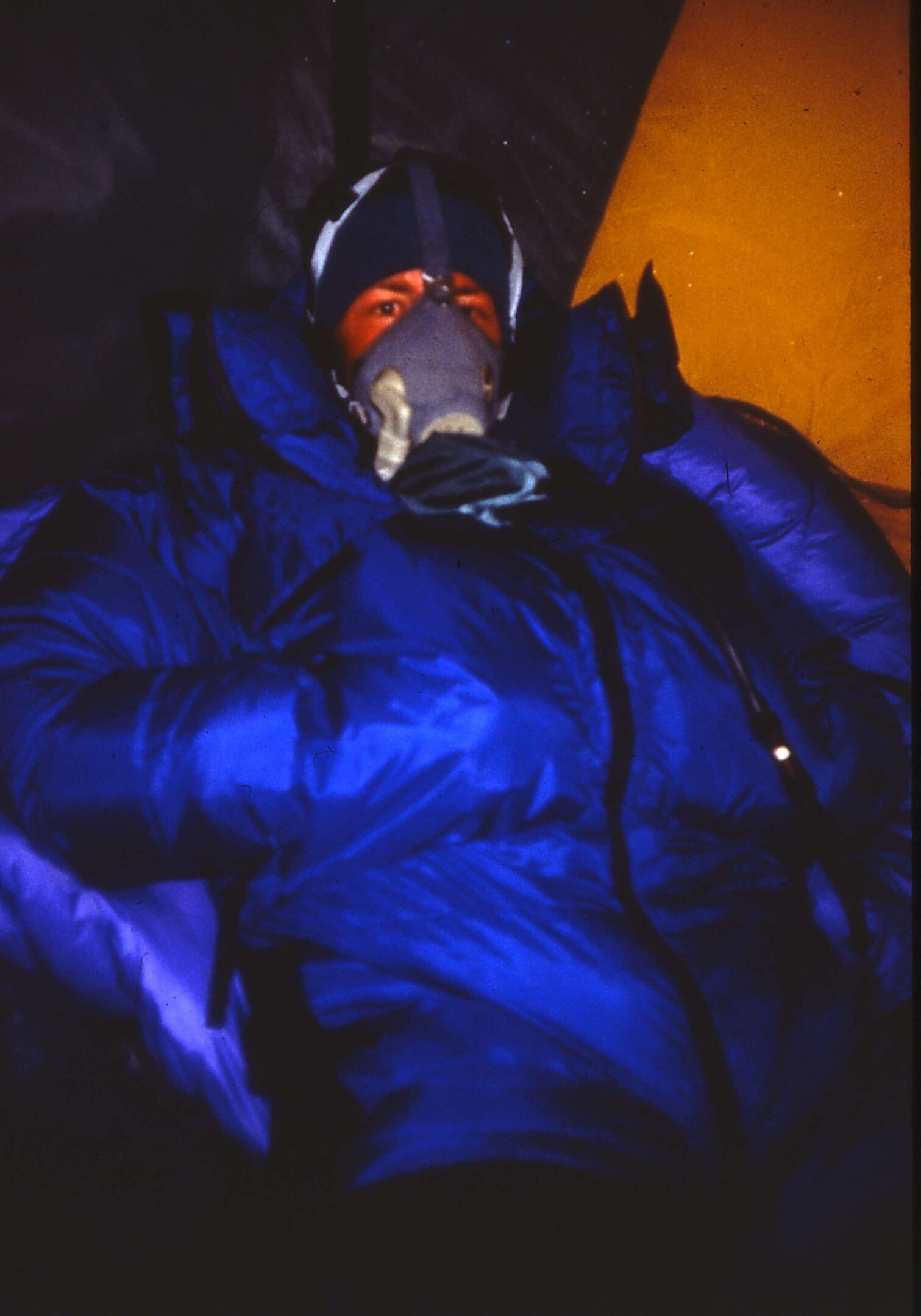
Brent Bishop at the South Col after summit
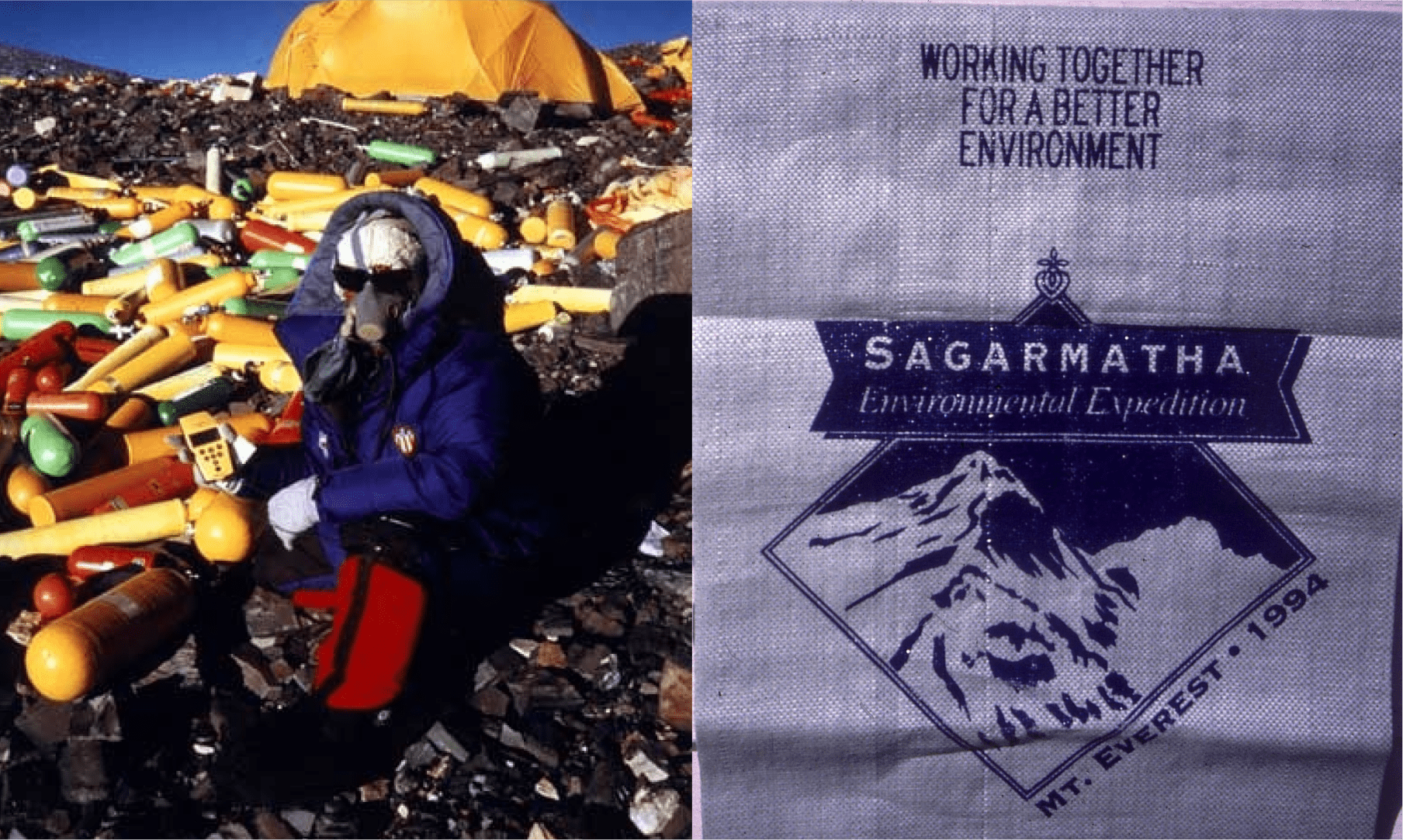
Steve Goryl while stranded at 26,000 ft. He is surrounded by discarded oxygen
bottles, and is holding the Trimble Inc. GPS used to record the trash locations.
To the left is a photo of one of the many bags used to put trash in from the high camps and bring them down to base camp.
It is Challenging Work to Clean Up the Now Desecrated Mountain Environment